
Pregnancy
During pregnancy there is a greater tendency for the blood to clot inside the deep veins of the legs and, thus, VTE to occur
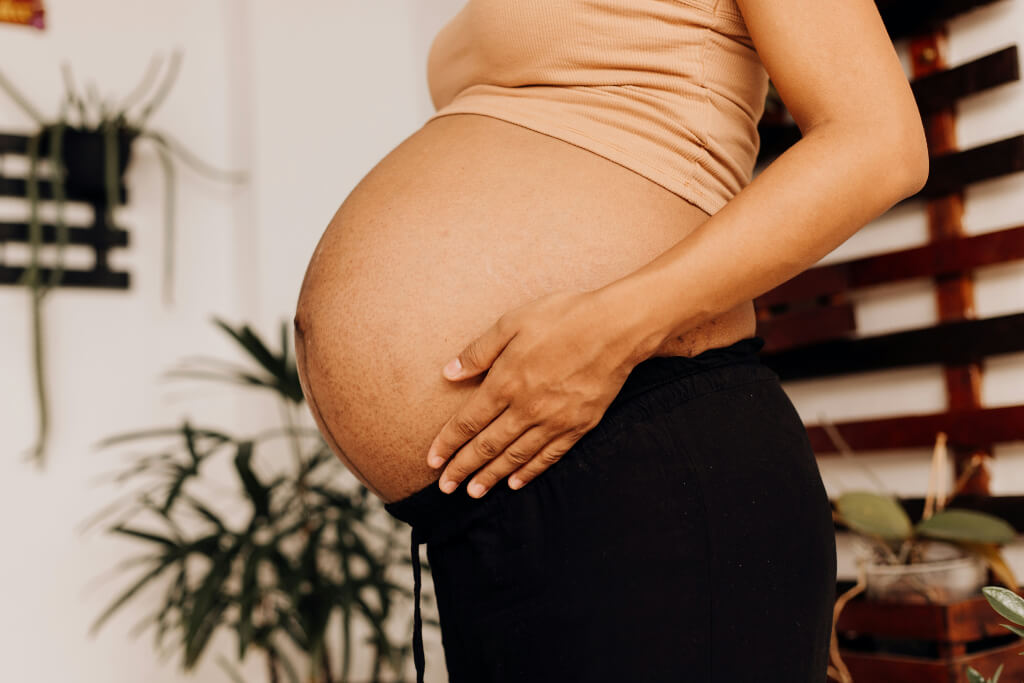
The pressure caused by the fetus on the veins of the legs, at groin level, the production of the placenta of procoagulant substances (to prevent bleeding) and the lower mobility of pregnant women, help the appearance of venous thromboembolism (VTE).
Pregnant women run five times more risk of suffering VTE than non pregnant women of similar age.
Although the number of pregnancies with this disease is low, it is a problem of great relevance since pulmonary embolism it is one of the leading causes of death in pregnant women and during the postpartum period, and deep vein thrombosis in the legs can lead to permanent symptoms.
VTE symptoms in the legs can be confused with pregnancy symptoms themselves. Furthermore, pulmonary embolism symptoms can also occur in pregnant women without an embolism. However, the fact that these symptoms may be normal in a pregnant woman, should not delay the diagnosis of the disease.
All pregnant woman showing some of the symptoms described above, should have an ultrasound of their legs to rule a possible deep vein thrombosis out. When suspecting pulmonary embolism, there are examinations that can be done which incur little risk on the fetus in order to confirm or rule out the disease.
In women who become pregnant through artificial fertilization and/or in vitro fertilization treatment, we know that the risk of developing a pulmonary embolism is higher than among naturally pregnant women. If this is your case, consult your doctor.
Treatment
In pregnant women, anticoagulant therapy is given in the form of subcutaneous injections based on low-molecular-weight heparin: an injection a day, for one month after childbirth. Once the treatment is established, the evolution of the disease is generally good, with less than 2% of women suffering relapses or bleeding during the treatment.
A pregnant woman who has already had a deep vein thrombosis or a pulmonary embolism, is at a high risk of having a new episode during her pregnancy. In this case, a doctor must be consulted to receive a suitable prevention treatment throughout her pregnancy.
RELATED QUESTIONS
I am pregnant and my doctor told me that I must walk every day, because I run the risk of suffering a thrombosis. How do I know if I have it?
I am four weeks pregnant and a few years ago, I suffered a pulmonary embolism. Am I at risk of this condition recurring? Can I do something to prevent it?
RELATED INFORMATION


What is TROMBO.info
TROMBO.info is your website about venous thromboembolic disease (venous thrombosis and pulmonary embolism).

TROMBO.info is a project of the Fundación Fuente
The information provided on the website does not replace but complements the relationship between the healthcare professional and the patient or visitor. In case of doubt you should consult your health professional of reference.

Quick access
Last update
July 2024
TROMBO.info © 2015 All rights reserved