
Extended trips
All passengers who travel for more than four hours are prone to thrombosis due to lack of movement. This is the so-called ‘traveler’s syndrome’

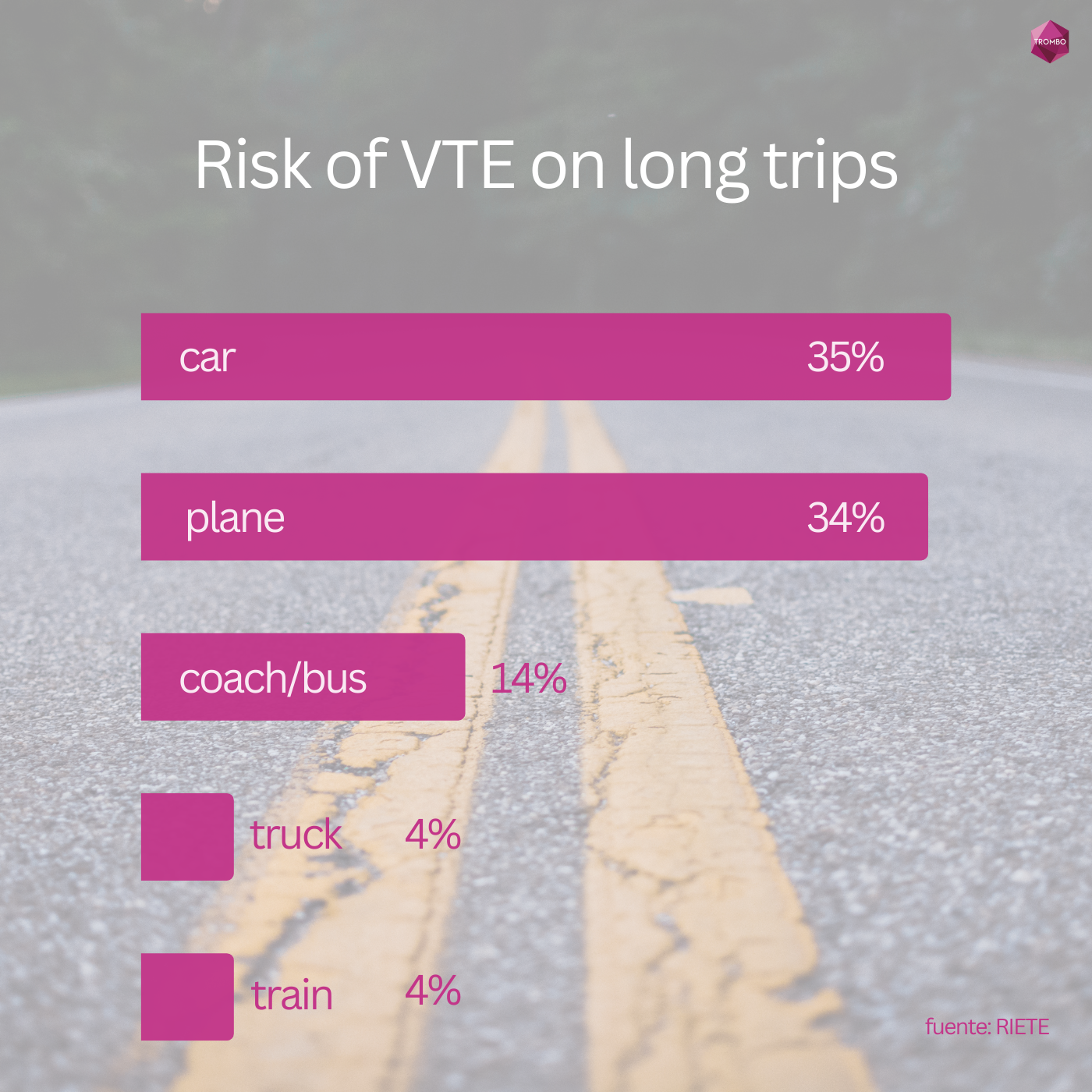
The appearance of deep vein thrombosis (DVT) and pulmonary embolism (PE) in relation to extended trips by airplanehas had a considerable echo in the media in recent years.
This was called ‘economy class syndrome’, with an emphasis on the importance of lack of space on most commercial flight. This is now referred to as the ‘traveler’s syndrome’, a more precise term. since it can also happen to passengers traveling in business class, as well as to those on long trips by other means of transport.
It is a rare cause of VTE. Although there is a real risk, it is still small. A person who travels long-distance is estimated to have a two to four-fold higher risk of VTE than a person who does not travel at all.
The likelihood of suffering VTE related to traveling is much greater in people with prior risk factors, therefore these people should take preventive measures.
Tips for trips longer than four hours
All passengers who do trips of more than four hours, and especially more than 6 to 8 hours, must follow a series of recommendations to prevent the appearance of VTE:
- perform exercises periodically such as stretching and contractions of the muscles of the legs
- avoid wearing tight clothing
- avoid being dehydrated, thus drinking adequate amount of water or fruit juices
- avoid drinking alcohol, taking tranquilizers or other substances that promote deep sleep
- to get up and walk on the aisle of the plane or bus periodically
- to frequently change their posture while sitting
- avoid crossing of legs
Travelers with previous risk factors of VTE, should also use proper compression stockings on their legs, which provide pressure at the level of the ankle. These stockings are not prescribed at all for the general public.
The use of anticoagulants in patients with a very high risk seems reasonable, but is not supported by clinical studies and it can be controversial. The efficacy of aspirin for this problem has not been demonstrated either, so its use should be avoided.
RELATED INFORMATION


What is TROMBO.info
TROMBO.info is your website about venous thromboembolic disease (venous thrombosis and pulmonary embolism).

TROMBO.info is a project of the Fundación Fuente
The information provided on the website does not replace but complements the relationship between the healthcare professional and the patient or visitor. In case of doubt you should consult your health professional of reference.

Quick access

Last update
July 2024
TROMBO.info © 2015 All rights reserved